We are Funded! Check our Crunchbase Profile


Interior Design and Architecture Visualization

Problem Statement
Design teams need to present multiple visual concepts to clients quickly. Traditional 3D rendering and manual redesign are slow, expensive, and limit how many options can be explored during early client discussions.
AI Implementation Approach
Use a generative image model to create multiple interior design variations from a single base room image. The layout and structure of the room remain fixed while styles, materials, lighting, and decor are changed through prompts.
Industry
Interior design firms
architecture studios
Output
Maintain creative freedom within the bounds of each content area while following room layout structure
Preserve architectural elements while allowing style transformations
Generate numerous design options from a single base room layout
Benefits
Time Efficiency
Generate multiple design variations in minutes instead of hours
Develop concepts rapidly & maintain structural integrity while transforming interior elements with simple prompting and input images
Near-instantaneous generation of design concepts for client presentations
real estate staging companies
Input Prompt
Create three distinct style variations of the same room:
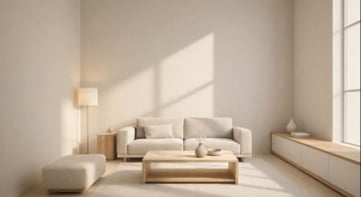
Modern Minimalist
Clean-lined, low-profile furniture, matte finishes, neutral palette of white, light beige, and soft gray, minimal decor, natural wood accents, uncluttered surfaces, soft daylight, calm and airy atmosphere.Luxury Contemporary
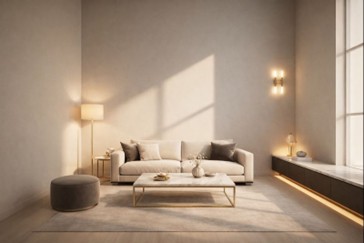
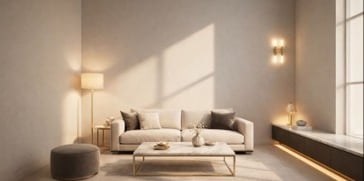
Premium furniture with elegant forms, plush seating, marble or stone surfaces, metallic accents in gold or brass, layered lighting with ambient and accent lights, refined textures, rich neutrals like cream, taupe, and charcoal, high-end styling.Scandinavian
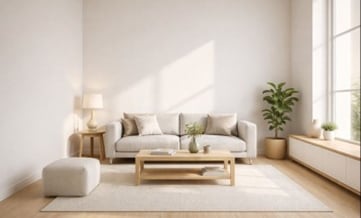
Light wood flooring, white or pale walls, cozy fabric sofa, simple functional furniture, indoor plants, soft textiles, bright natural daylight, warm and inviting Nordic aesthetic.
Analyse condition images to identify prominent content shapes with AI Image Conditioning with Segmentation
Generates image that closely follow the layout of the condition image
Configurable Strength Parameter Control for how closely to follow the original layout (0.0-1.0, default 0.7).


Input Image
Serene minimalist living room design
Luxurious modern living room design
Bright Scandinavian living room design


Technical Performance
Businesses that adapted this approach reported 30% reduction in content creation time, 40% faster time-to-market and Improved consistency across formats and channels
Workflow Enhancement
Cost Reduction Benefits
Significant cost reduction in traditional visual content creation processes
Reduced need for multiple physical mockups and material samples
Elimination of time-intensive manual rendering processes
Client Approval Process Improvements
Faster client approval cycles through rapid iteration capabilities
Enhanced client engagement with multiple visual options
Reduced revision cycles due to ability to quickly generate alternatives
Operational Advantages
Handle multiple client projects simultaneously
Maintain design standards across all generated variations
Seamless workflow integration with existing design tools
Frequently asked questions
1. What is AI-powered interior design visualization?
AI-powered interior design visualization uses generative image models to create multiple design variations from a single room image while keeping the original layout and structure intact.
2. What problem does this solution solve for design teams?
It replaces slow and costly manual 3D rendering with rapid generation of multiple interior concepts, enabling faster client presentations and approvals.
3. How does AI generate different interior styles from one room image?
The system preserves the room’s layout and architectural elements while changing styles, materials, lighting, and decor through detailed text prompts.
4. What input is required to generate design variations?
A base room image and a descriptive prompt defining design styles such as modern minimalist, luxury contemporary, or Scandinavian are required.
5. Can the room layout be preserved exactly?
Yes. The AI keeps the original room structure fixed and only modifies interior elements like furniture, finishes, lighting, and decor.
6. How fast are AI-generated interior concepts created?
Multiple high-quality design variations can be generated in minutes, enabling near-instant concept creation for client discussions.
7. How does this improve the client approval process?
Rapid iteration allows designers to present multiple options early, leading to faster approvals and fewer revision cycles.
8. Does the system maintain design consistency?
Yes. The platform helps maintain consistent design standards across all generated variations and projects.
9. Can designers control how closely the output follows the original layout?
Yes. A configurable strength parameter allows control over how strictly the AI follows the original layout, typically ranging from 0.0 to 1.0.
10. What technical capabilities support layout accuracy?
The system uses AI image conditioning and segmentation to identify key structural elements and generate outputs that closely match the input layout.
11. How does this reduce design and rendering costs?
It eliminates the need for repeated manual rendering, physical mockups, and material samples, significantly lowering visual content creation costs.
12. Can this solution handle multiple client projects?
Yes. The platform is designed to support multiple projects simultaneously while maintaining quality and consistency.
13. How does AI visualization improve time-to-market?
Design concepts can be created and finalized much faster, resulting in quicker project launches and client decisions.
14. Which industries benefit most from this solution?
Interior design firms, architecture studios, and real estate staging companies benefit from faster, more flexible visualization workflows.
15. Can this integrate with existing design workflows?
Yes. The solution integrates seamlessly with existing design tools and workflows used by professionals.

Integrate those solutions in your company
Contact below and let us design and integrate solutions tailored to your business needs


We help businesses like yours implement practical AI tools that solve specific problems, reduce costs, and create competitive advantages—without the complexity and risk of traditional AI projects.
4th Floor, Chidanand Heights
Manish Nagar, Nagpur - 440025
Maharashtra, India
3235 Industrial Way, STE G
Snellville,GA 30039, USA
Contact Us